
Home / Laureates / Ari Barack Fisher
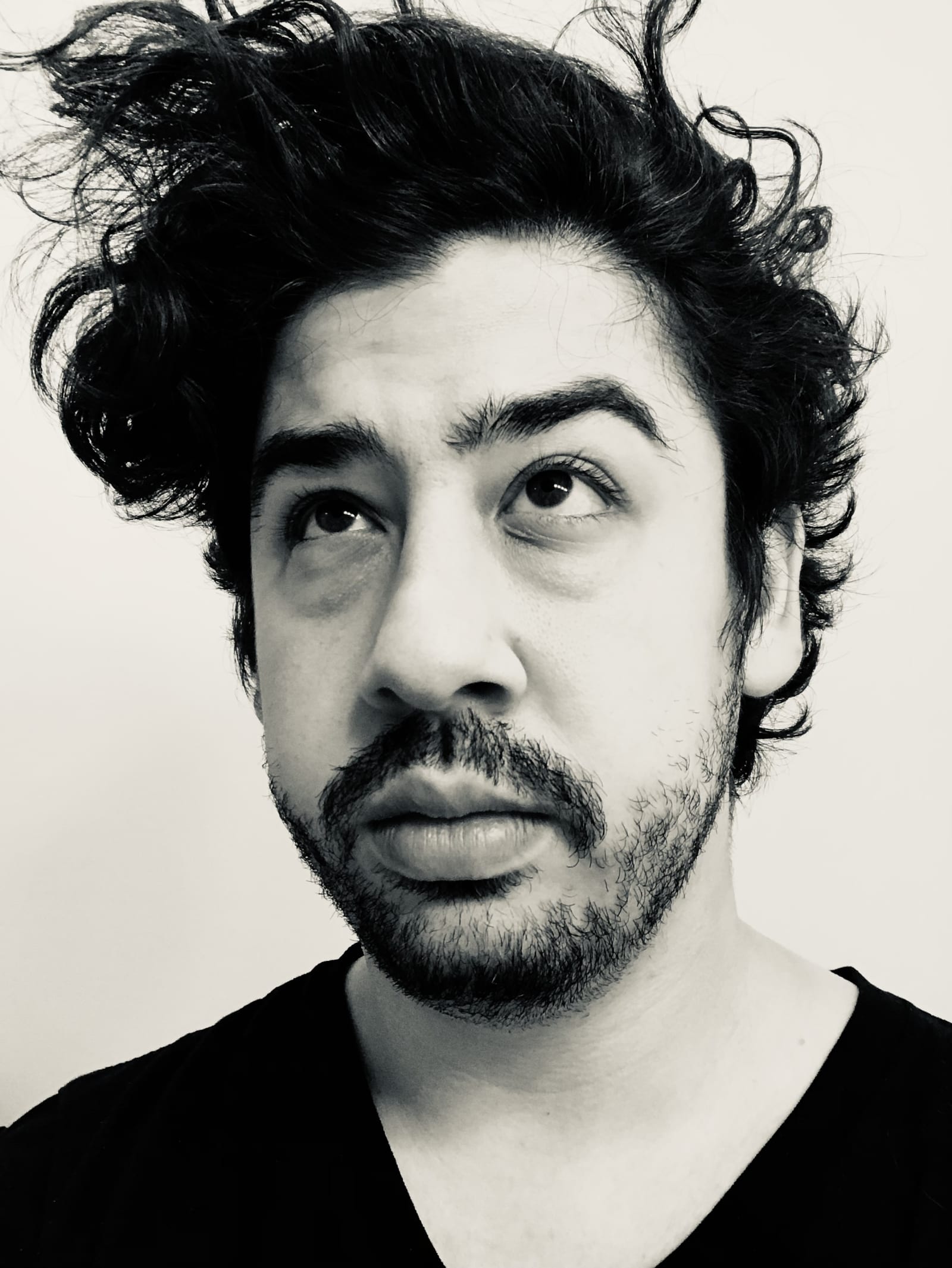
Portrait of Ari Barack Fisher
Laureate

Ari Barack Fisher

United States

Ari Barack Fisher, a multi-award-winning composer with degrees from Indiana University Jacobs School of Music (Bachelor of Music and Master of Music), aims to connect with listeners through evocative melodies and intricate harmonies. Fisher, an avid collaborator, has worked on a variety of projects ranging from feature-length films to video game soundtracks. In 2015, Fisher received the Jon Vickers Film Scoring Award for his score to the 1916 silent film "The Return of "Draw" Egan by William S. Hart. In 2019, the score was revised for the restored Library of Congress Version of Hart's film featuring newly discovered footage and scene swaps. The LOC version of the score had its European premiere at the 2019 Pordenone Silent Film Festival (Le Giornate del Cinema Muto). In 2021, Fisher collaborated with the renowned cross-over string quartet ATLYS and Jeff Montalvo (Seven Lions) in arranging string quartet covers of EDM songs by Seven Lions for performances at Red Rocks Amphitheater and The Gorge Amphitheater. Fisher's arrangements featuring ATLYS were then recorded and released by Ophelia Records in an album titled OPUS. Fisher's teachers and mentors include David Taylor (Assistant Concertmaster Chicago Symphony Orchestra), Michelle Szamarzewska Wynton, Michel Merlet, Sven-David Sandström, Narcis Bonet, Claude Baker, Aaron Travers, Don Freund, and Rick Marvin. His work has been performed by ATLYS, Seven Lions (Jeff Montalvo), Woori Orchestra, Artemis Chamber Orchestra, Budapest Scoring Orchestra, Indiana University Chamber Orchestra, New Trier Symphony Orchestra, Hawaii Youth Symphony, Hawaii Music Educators Association Honors Orchestra, Naples Community Orchestra, and members of the Dallas Symphony Orchestra. Other works have been performed by violinists Richard Silvers, Jorja Fleezanis, pianists Norman Kreiger, Nicholas Ho, Clare Longendyke, vocalist Laurie Rubin, conductors Alvin Ho, Nicholas Hersh, Joseph Stepec and Henry Cheng. Venues include Teatro Verdi (Pordenone Silent Film Festival), Red Rocks Amphitheater, The Gorge Amphitheater, Ravinia Music Festival, and The Seoul Arts Center. His awards include the Indiana University cinema competition, the Jon Vickers film scoring award, and most recently the VGM Con Video Game Music Awards best symphonic arrangement in 2023. In 2023, Fisher was hired to compose two tracks for a special edition of the popular video game Bread and Fred. In the same year, ZREO: Second Quest collaborated with ATLYS to release the album Fair Winds and Following Seas featuring ATLYS. Recently, Fisher's composition Romance for Cello and Piano was recorded by Warren Hagerty (Verona Quartet/Principal Cello Pacific Symphony) and Orli Shaham. He is currently releasing an album of original composition for string quartet titled The Sonnenberg Suite on November 16th recorded with the string quartet ATLYS and Grammy award winning producer Adam Abeshouse. Fisher also serves as co-founder, music director, lead composer, and arranger for ZREO: Second Quest, a company that creates interpretations of music from the Legend of Zelda video game series. He is also composer-in-residence and section violinist of The Artemis Chamber Orchestra. His concert works have been performed in Austria, Belgium, France, Germany, Italy, South Korea, Taiwan, and across the United States. His music has been featured across the nation in television ads. Fisher currently resides in Skokie, Illinois with his wife Jamie, their newborn son Chaim, and their dog Birdie.

Latest Recognition
  • Absolute Winner
COMPOSITION
Classical Music Stars — 2/2025
Awards & Recognitions

A timeline of recognition

Classical Music Stars — 2/2025
COMPOSITION
Ari Barack Fisher’s “The Sonnenberg Suite” The Sonnenberg Suite About the Sonnenberg Gardens and Estate Frederick Ferris Thompson, a New York City banker, and his wife Mary Clark Thompson, daughter of a NewYork governor, bought the 300-acre Sonnenberg farm near Canandaigua Lake in 1863 as their summer home. They replaced the old farmhouse with the current mansion in 1887. After Mr. Thompson died in 1899, Mrs. Thompson turned the grounds into a memorial garden. In her travels around the world, she drew ideas from different gardens to create the unique mix of styles that distinguish the Sonnenberg Gardens. She worked on the garden estate from 1902 to 1919. About The Sonnenberg Suite Upon hearing the ATLYS string quartet perform a concert at Ferris Hills in 2019, Thomas Mees, a volunteer at the gardens was inspired to approach the group after the concert with great enthusiasm about his vision for a piece of music that would embody the majesty, enchantment, history, and beauty of the Sonnenberg Gardens. Ari Fisher was commissioned by ATLYS to compose the ten movement, hour long work. Each movement serves as a vignette portraying each of the nine gardens and their themes, with an additional movement that serves as an overture. I . The Sonnenberg Gardens This grand overture begins with Sonnenberg Estate owner Mary Clark Thompson’s theme. This theme can be heard throughout the suite, depicting Thompson as she walks through each of her gardens. The movement is flavored with flowing melodies somewhat reminiscent of Borodin, Tchaikovsky, and Dvořák. The movement builds to a raucous climax before a stunning cello solo slows the piece back down. Near the end, a particularly delicate moment features a solo violin accompanied by gentle pizzicato. Perhaps this is Mary remembering her late husband and the tender moments they shared before being whisked off to celebrate the opening of the gardens, which she had built in his memory. II. The Japanese Garden Thompson’s peaceful Japanese Garden contains tiny stepping stones, a teahouse, and a slow flowing river. The themes are inspired by the texture of nature, rustling leaves, occasional breezes, and the famous Sakura folk melody about cherry blossoms. In homage to the kokyu, the only traditional Japanese string instrument played with a bow, the melody is played high up on the cello. The orchestra achieves a truly quiet sound and unique color utilizing metal practice mutes. III. The Sub-Rosa Garden We duck into the beautiful lush greens of Thompson’s private hideaway with playful pizzicatos, then warm chords that reach a breathtaking climax as the marble fountain flows. Slow tender music follows, reflecting the serene calm felt after being alone in the “secret garden.” IV. The Rose Garden Coming from the quiet resolve of the Sub-Rosa Garden, the Rose Garden blooms dramatically into a melancholy cello solo accompanied by fluttering strings that color the mind’s eye with French Impressionism. Just as every rose has its thorn, the Rose Garden explores the sometimes bittersweet tenderness of love and heartbreak. This movement is extra special to Ari and ATLYS because he arranged for the quartet to perform it in the gardens as he proposed to his darling wife, Jamie. V. The Old-Fashioned Garden The main melody of the movement is a neoclassical minuet inspired by Haydn and early Beethoven. We dance through pathways of a formal English country garden with a splendid pergola. VI. The Blue and White Garden We hear Thompson’s theme as we enter her favorite garden which features only blossoms of, you guessed it, blue and white. This limitation brings together flowers perhaps not typically seen together: blue ageratums, blue delphinium, blue salvia, sweet alyssum, campanula, phlox, hyacinth, and agapanthus. VII. Pansy Garden A short movement shines a spotlight on the gorgeous, warm, and chocolatey sound of the viola, supported by colorful harmonies of the other strings. The botanical latin name of the pansy, after all, is “viola.” VIII. Rock Garden With its statue of Pan, earthy stone walkways and shaded tunnels, this garden has darkly dissonant sounds until the rising entangled scales illustrate the thick climbing hydrangea that follows up a hundred year old staircase to the roof of an open stone summer house. IX. Moonlight Garden This garden, best viewed at night with its white flowers and silver foliage, begins rhapsodically, almost improvised. As the introduction comes to a close, the solo viola plays a lullaby while the rest of the ensemble joins in counterpoint, filling in intense harmonies. The movement ends with a restatement of the theme played using harmonics, eerie whistling tones, painting the image of the garden mysteriously glistening in the moonlight. X. Italian Garden The suite concludes with a rip-roaring Rondo Tarantella, a rapid whirling dance originally from southern Italy. The piece comes to a brilliant end, accelerating until it seems to collapse with exhaustion and bravura!
  • Absolute Winner