
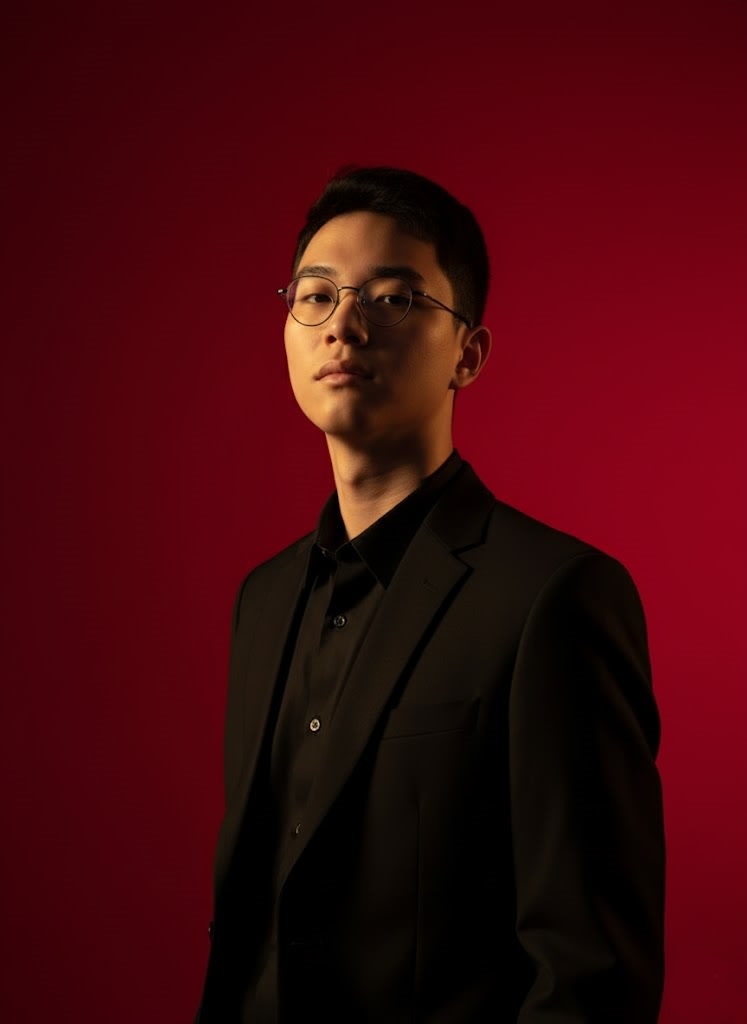
Laureate
Cheng-En Wu
Taiwan
Dylan (CHENG-EN WU) is Taiwanese composer specializing in film and game scoring. A member of ASCAP, his creative style is fundamentally narrative-driven, with a focus on cinematic orchestral arrangements.
Through his personal brand, Hollow Key, Dylan is dedicated to high-quality music production and is currently expanding his portfolio with the comprehensive series Definitely Not a Game Soundtrack, Vol. 1. His representative works include the collaborative piano solo album Why Must We Wake, the concerto single Subduction, and the upcoming release Two Hearts, One Spring Evening.
From vibrant fantasy RPG themes to high-tension cinematic scores, Dylan’s work demonstrates a profound ability to build immersive worlds for digital media.
Latest Recognition
- 1st Prize
COMPOSITION
World's Best Musicians Competition — 2/2026
Awards & Recognitions
A timeline of recognition
World's Best Musicians Competition — 2/2026
COMPOSITION
"Asphalt Reflections: Days to Days" is a cinematic piano solo piece that explores the profound passing of time from a singular urban vantage point. The subtitle, "Days to Days," represents the cyclical transition of seasons unfolding upon the very same street corner. Through a brilliant harmonic journey from Section B to C, the music seamlessly weaves through three distinct tonalities, each embodying a different season: the initial warmth of Spring, the unfolding intensity of Summer, and the melancholic fading of Autumn. While the left hand maintains a persistent, clock-like 3/4 rhythm of daily routine, the right hand's lyrical shifts capture how nature's changing colors reflect upon the wet asphalt. The piece concludes with a spacious, resonant arpeggio—a lingering echo of quiet introspection amidst the eternal flow of time.
- 1st Prize
Mozart International Music Competiton — 2/2026
COMPOSITION
"Why Must We Wake?" is the philosophical anchor and the 11th movement of the piano solo suite, "To Wake With Starlight." This programmatic piece explores the subconscious as a psychological sanctuary—a gentle refuge from the harshness of reality. Structured with seamless narrative flow, the music transitions from a serene, distant dreamscape into moments of inner agitation, before dissolving into the high-register 8va textures that evoke a stark, shimmering starry night. It poses a poignant question to the universe: if the dream is a place of absolute solace, why must we ever open our eyes? Every dynamic mark and pedaling nuance in this score is meticulously crafted to capture a fleeting spark of cosmic comfort.
- Gold Award
Classical Stars International Music Competition — 2/2026
Composition
"Two Hearts, One Spring Evening" is a programmatic orchestral work for solo piano and full orchestra, designed as a cinematic tone poem. The composition explores the intricate emotional landscape of a spring confession, moving from the pastoral stillness of a shared moment under cherry blossoms to a triumphant, symphonic celebration of love.
The work is characterized by its dramatic structural arc. It begins with a delicate, minimalist piano solo that gradually invites a rich orchestral texture. A pivotal moment occurs in the central tutti section, where the piano utilizes a majestic chordal technique inspired by the Romantic concerto tradition—specifically the opening of Tchaikovsky’s First Piano Concerto—to symbolize a world overflowing with joy. The piece concludes with a poignant dialogue between the piano and orchestral voices, eventually resolving all harmonic tension into a serene, lingering sunset. This work represents a bridge between contemporary narrative sensibilities and classical symphonic depth.
- Artist of the Season
- Composer Gold Prize
- 20th and 21st Century Gold Prize
- Lyrical Piece Gold Prize
- Own Composition Gold Prize
Global Young Musicians Competition — 2/2026
COMPOSITION · E
Subduction is a powerful, large-scale modern concerto scored for solo violoncello and full orchestra. The composition functions as a visceral sonic metaphor, translating the colossal geological friction and tectonic tension of the earth into a harrowing musical dialogue.
The work explores the volatile dynamic between the solo cello and the massive, overwhelming weight of the orchestral textures. Structurally, it relies on intense timbral exploration and modern atmospheric storytelling, abandoning conventional lyrical paradigms to capture the raw physical mechanics of compression, resistance, and sudden, violent release. As the solo instrument navigates through dense, shifting harmonic terrain, the orchestra acts both as the crushing lithospheric mass and the vast, hollow space beneath it. This piece demands a commanding technical virtuosity and emotional depth from the soloist, offering a profound, high-tension symphonic experience that bridges contemporary cinematic aesthetics with rigid orchestral complexity.
- Gold Award
Fenix Award International Music Competition — 2/2026
COMPOSITION
Where the Wind Begins
Where the Wind Begins is a narrative piece for chamber orchestra. Beginning and ending with a delicate harp solo, the work weaves flute, horn, and lush strings to evoke a timeless, medieval atmosphere
- Platinum Winner
Your next stage