
Where Rigorous Structure Meets Human Fragility
For Japanese composer Kyoichiro Mii, music begins when human breath and physical presence inhabit a score, bridging formal logic with vulnerable human emotion.
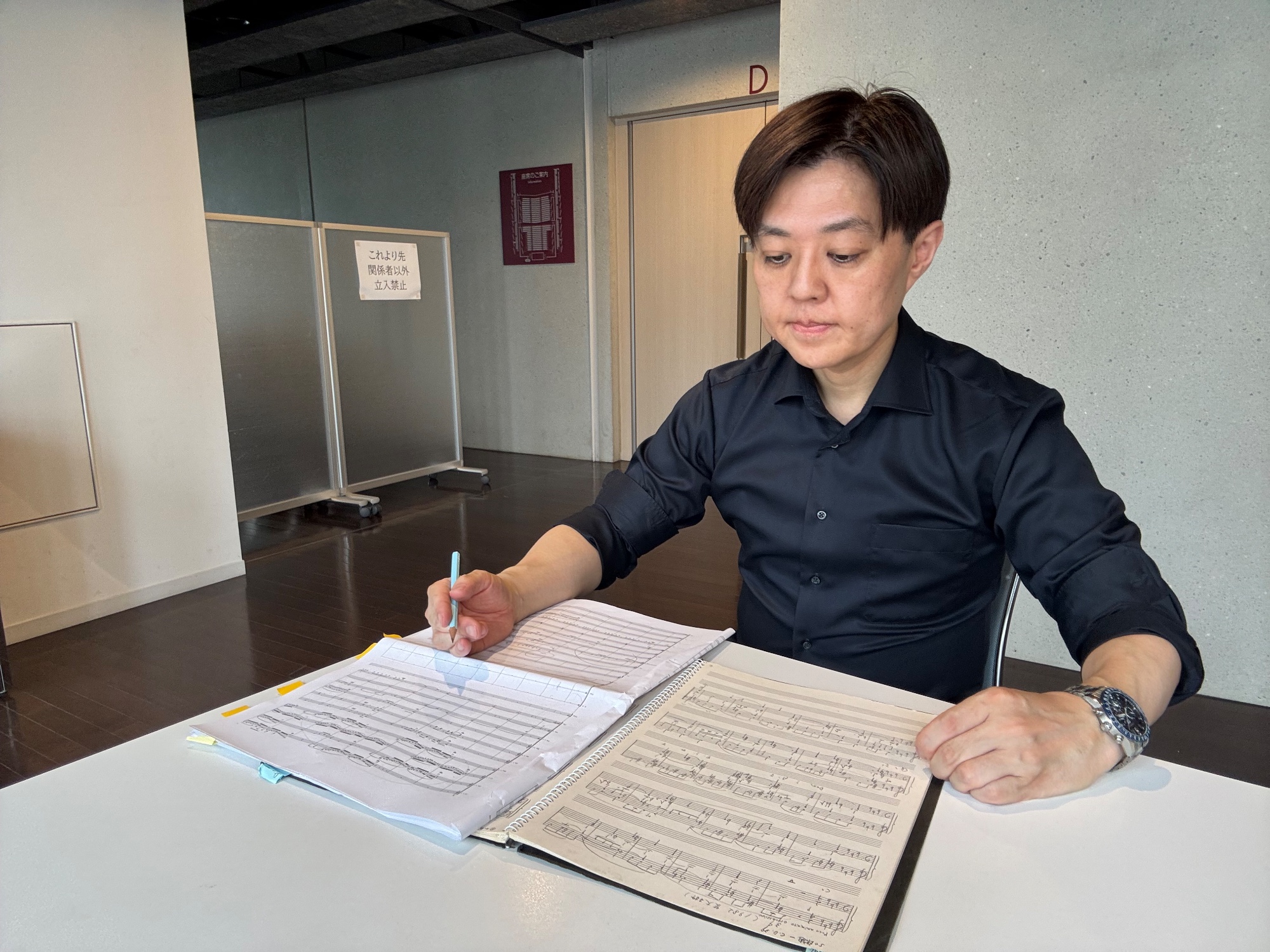
Japanese composer Kyoichiro Mii approaches music as a physical and human phenomenon, informed by his background in spatial analysis and his extensive experience in choral and orchestral performance. Having studied with figures such as Teruyuki Noda, Keiko Harada, and Naoki Sakata, Mii explores the space where structural clarity meets the physical realities of voice and breath. Following recent international competition recognition for his work, he reflects on performer collaboration, compositional lineage, and his search for a distinct artistic voice.
Your compositions have recently received broad international recognition (top awards in both the Brahms IMOC and Haydn OMIC, season 2/2026). What does this response to your work mean to you at this point in your creative life?
Receiving international recognition is encouraging, but I do not regard awards as the final purpose of composition. For me, they are signs that something in the music has travelled beyond my own circumstances and reached listeners from different cultural backgrounds.
This is particularly meaningful because I have gradually become less interested in writing according to an established style and more interested in discovering my own musical language. I am increasingly drawn to voice, breath, physical vibration, and the relationship between structural clarity and human fragility.
These awards therefore give me confidence, but also a sense of responsibility. They encourage me not simply to repeat what has already been successful, but to go further into territory that is still uncertain. At this point in my creative life, recognition is valuable because it gives me the courage to take greater artistic risks.
Your academic research includes spatial analysis, yet your music focuses heavily on physical elements like breath and the human voice. How do structural logic and physical intuition come together when you begin a new piece?
I do not see structure and physical intuition as opposites. For me, structure creates the space in which physical experience can become audible.
My earlier academic research involved spatial analysis and the study of relationships between different geographical areas. Although this belongs to a very different field, it taught me to think in terms of distance, density, proximity, and relationships rather than isolated objects.
In composition, however, I often begin much more physically: with a breath, a vocal gesture, a resonance, a trembling sound, or simply the sensation of tension in the body. Only afterwards do I ask how that physical impulse can generate a larger structure.
I am especially interested in trembling. A trembling voice is unstable, but it is also intensely human. I have gradually come to think of such instability not as something that must be corrected, but as musical material in itself. Structure allows me to transform these fragile physical phenomena into musical time and form.
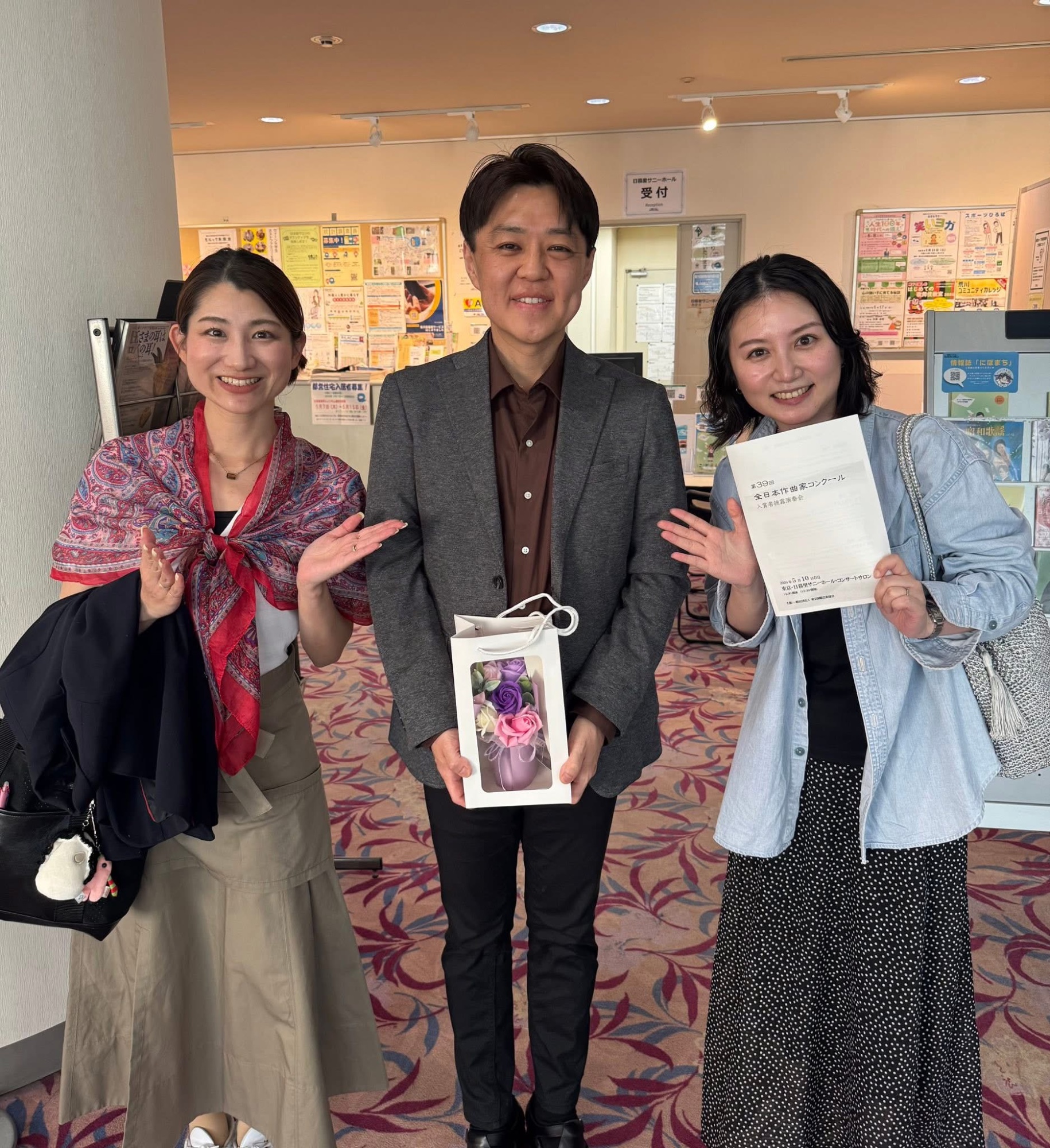
Drawing on your own experience performing in choirs and orchestras, how does that practical perspective shape the way you write for other musicians?
Performing has taught me that a score is not yet music. Music begins when another human body breathes into it, touches it, and gives it time.
My experience in choirs and orchestras has made me very conscious of what performers physically experience: where they breathe, how tension accumulates, how an ensemble listens to one another, and how a musical gesture feels from inside rather than from the audience.
I have also studied and played a number of orchestral instruments. This does not mean that I avoid difficulty. On the contrary, I am interested in demanding writing when the difficulty has an expressive reason. But I want the performer to understand why a gesture exists.
I increasingly think of composition as a collaboration with performers. Their bodies, breathing, resistance, and even limitations are not obstacles to the music. They are part of the material from which the music is made.
“Music begins when another human body breathes into it, touches it, and gives it time.”
Kyoichiro Mii
You have studied under figures like Teruyuki Noda, Keiko Harada, and Naoki Sakata. How have their compositional philosophies influenced the way you define your own aesthetic?
Teruyuki Noda holds a special place in my development as a composer. He was one of the people who encouraged me to pursue composition seriously. From him, I learned the importance of solid écriture — harmony, counterpoint, and the craft of constructing music — but also something more fundamental: the importance of protecting time in which to concentrate completely on composition.
He once told me that in music, when you truly discover one essential thing, the path begins to open naturally from there. That idea has stayed with me. When he looked at one of my early works, he told me that he could clearly see the process of study behind it. His encouragement at that stage gave me confidence to continue on the path of composition.
In studying his music more deeply, I have also become increasingly conscious of what I describe as utagokoro — a spirit of song — together with musical propulsion and a strong sense of formal construction. These are not qualities I want simply to imitate; they are principles I continue to examine through my own music.
My work with Keiko Harada has encouraged me to move beyond the literal representation of an image and to consider how it can be transformed into more abstract musical relationships.
Naoki Sakata has opened another direction for me: thinking about sound itself as a source of compositional language. Through encounters with ideas associated with composers such as Ligeti and Grisey, I have become increasingly interested in timbre, resonance, and the internal structure of sound — not as styles to imitate, but as starting points from which to discover my own methods.
These influences are different, and I do not want to belong completely to any single school or aesthetic. I am interested in what may emerge from their intersection as I continue searching for a musical language of my own.
What musical ideas or sound worlds are you most eager to explore next in your work?
At present, I am particularly eager to explore larger-scale forms, especially orchestral and wind ensemble music. I am fascinated by the possibility of allowing ideas of breath, resonance, physical gesture, and harmonic relationships to unfold across a large ensemble and a broad acoustic space.
Rather than beginning with a conventional harmonic system, I am interested in how a small number of fundamental relationships and limited musical cells can expand into a much larger sound world.
At the same time, I want to explore the boundary between instrumental sound and the human voice. Breath, trembling, resonance, silence, and the moment before a sound begins are becoming increasingly important materials for me.
Ultimately, I am searching for music that is structurally clear but does not feel mechanical — music in which rigorous construction can coexist with vulnerability, prayer, and physical presence.
I do not yet know exactly where this exploration will lead. That uncertainty is precisely what interests me most.
Read this interview as a magazine edition
The designed Maestro Magazine edition of this conversation.