
Hearing the Entire Orchestral Piece in My Head
For French composer Romain Schmitt, writing for symphony orchestra is an intuitive process of transcribing music already fully formed in his mind.
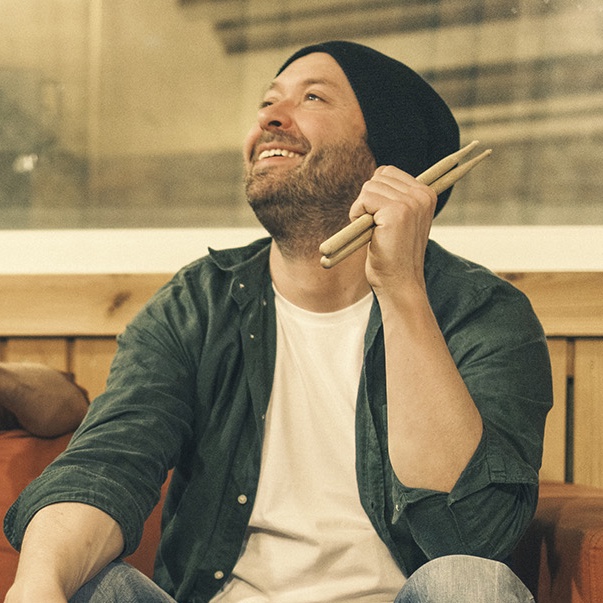
Trained as a drummer at the Strasbourg Conservatory before expanding into film scoring and orchestration, French composer Romain Schmitt brings a distinctly rhythmic and instinctive approach to his scores. Having led major productions and collaborated with ensembles such as the Budapest Scoring Orchestra, he bridges diverse musical worlds — from writing a symphonic concertino featuring handpan to orchestrating for Disney. Following recognition in international composition competitions, Schmitt discusses his creative process, orchestral leadership, and future plans.
How did you first get into composing, and how has your path as a composer developed since then?
I started out on drums at a very young age. Composition came a few years later, when my parents bought me music software packed with ready-made samples. That was the spark. I began creating my own music, building on the theoretical foundation I’d already developed thanks to an unusually keen curiosity and ear.
I had been studying music since early childhood when I enrolled in film school. That naturally pointed me toward film scoring, and from there into a serious study of the riches of classical music, counterpoint, orchestration and conducting.
I don’t work like most composers, because I’ve kept an instinctive way of creating, with no keyboard and no manuscript paper. I hear the entire orchestral piece in my head. My musical background tells me it’s sound and that it works, and then I write out each voice exactly as I hear it. That’s why I compose so quickly: I let my mind do the groundwork for a long time beforehand.
What drew you to pairing the handpan with a symphony orchestra in your Concertino?
It all started with a handpan-and-drums duo that I formed with my friend, the excellent Cyrille Lecoq. The handpan is a recent instrument, popularized by how easily a complete beginner can make music on it.
By creating our duo, Cyrille and I wanted to expand what the instrument could do and show off some of its more virtuosic sides. The handpan works remarkably well on several levels at once: melody, harmony, ostinato bass lines, arpeggiated fills...
To showcase all these ideas, I suggested to Cyrille that we launch the handpan into the big leagues, and offered to write him a symphonic work with him as the soloist. Since every handpan is handmade, each one has its own voice, its own tuning and its own scale: a handpan player and their instruments are one and the same. The Concertino is written in four contrasting movements, designed to put Cyrille’s musicality and his handpans in the spotlight.
The second movement is a moment for our handpan-and-drums duet, which creates an original moment of breathing space, sitting right at the heart of the piece amid the varied orchestrations. We recorded in Hungary with my friends from the Budapest Scoring Orchestra. Conducting them and seeing the astonished look on their faces as they discover new sounds or orchestrations is always a great joy.
What have you learned from leading large productions that you bring to creating your own shows?
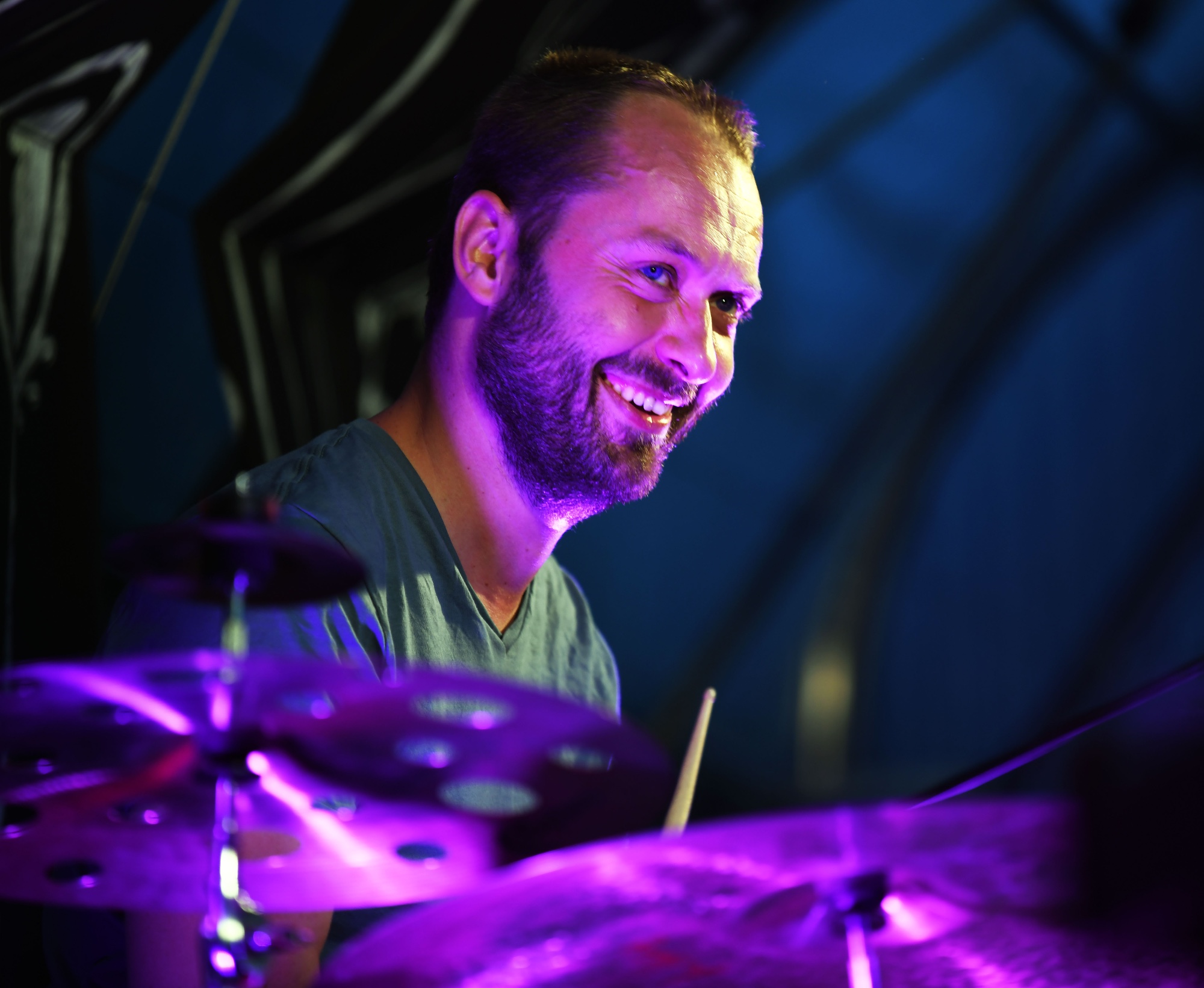
As a drummer, I developed a certain sense of how to lead an ensemble, though I’d rather speak of influence, because good leadership often comes down to details: a confident count-in, clearly anticipating the hits in a big band, setting the dynamics as clearly as I possibly can with my own playing, instilling a particular tempo, swing or groove when I know exactly how it will shape what everyone else plays...
I will always remember a quote from one of my teachers, Jean-Michel Heiby: “The drummer is the second conductor.” That sentence helped me understand how much the drums matter in a band, and therefore how much leadership matters. Every conductor knows the example: once the drummer decides to speed up, nothing can hold the orchestra back, and it takes off like a locomotive.
I created my own bands more than ten years ago, most notably Pepper Club the band. The collective brings together some of the best musicians around, and I learned a great deal alongside the prestigious guests we invited to play with us. Beyond concerts, I was given musical direction of ever-larger events: live music for high-society weddings, for prestigious brands, for TV shows, for the creation of grand Disney shows...
Most recently, I had the honor of composing all the music and running the orchestra for "Rififi, the musical". I’m in my element, because every one of my skills is called on to achieve a dazzling result, and the more grandiose the project, the more stimulated I feel!
“I don’t work like most composers, because I’ve kept an instinctive way of creating, with no keyboard and no manuscript paper. I hear the entire orchestral piece in my head.”
Romain Schmitt
What do you enjoy doing outside of music?
I have the very unpleasant quirk of waking up with a jukebox in my head and going through my day with a mental radio that plays songs I have no desire to hear, looping the choruses and solos of whatever it has picked. Another game I’ve played since I was a child, a terrible occupational hazard, is thinking about the harmonic or melodic similarities between tunes, and that is in fact what generates the playlist I’ll be subjected to all day.
All this to say that music is always there, even when I want to think about something else, which is why I force silence on myself whenever I can the rest of the time. (My mother never understood it when I switched off their radio: “A musician who doesn’t want music, how is that possible?!”)
Nature and the company of cats calm me, and quietly observing people and things is a pretty great pastime. Outings, travel and sightseeing recharge me quite a bit. But the passion that rivals music in my life is food. So when I’m visiting a country and make friends with a cat on the way to a traditional restaurant, I’m at my happiest!
Through the music I play, I developed a taste for, and an understanding of, dance. I practice Latin dances, salsa in particular. There are plenty of salsa nights, which lets me change scenery and see a few people when I’ve been composing for a few too many days and nights in a row.
What are your plans for the future?
I’ve started some wonderful collaborations that I hope to keep for a long time, and the commissions are pouring in, each more exciting than the last. Among other things, I’m an orchestrator for Disney, which promises some wonderful projects! I’ve signed quite a few works whose premieres I’m looking forward to attending, notably a piece for an extraordinary Swiss project that brings together several choirs in a spatialized arrangement. I can’t wait to see the result!
Competitions have helped put my name out there, and I hope very soon to widen my circle and my address book so I can discover other countries and other culinary specialties! I would love to collaborate with Asia. I won First Prize at the Ise-Shima Art International Composition Competition in Japan with the same work I mentioned earlier.
I also want to move closer to the United States, and particularly to American productions, where my style fits naturally. To that end, I’m even ready to relocate, so as to be where things are decided and defined... I’m currently thinking through whether it’s feasible.
I warmly thank Maestro Magazine for this opportunity to talk a little about my musical life, to spark curiosity and to showcase my work. I’m open to all collaborations and hope to make wonderful connections through this interview. I invite you to find me on social media for more information!
Read this interview as a magazine edition
The designed Maestro Magazine edition of this conversation.