
Combining Virtuosity with Emotional Narrative
For Belgian violinist Vilmos Csikos, music is about uniting technical command with emotional narrative, whether championing works by Henri Vieuxtemps or exploring the dramatic intensity of Shostakovich.
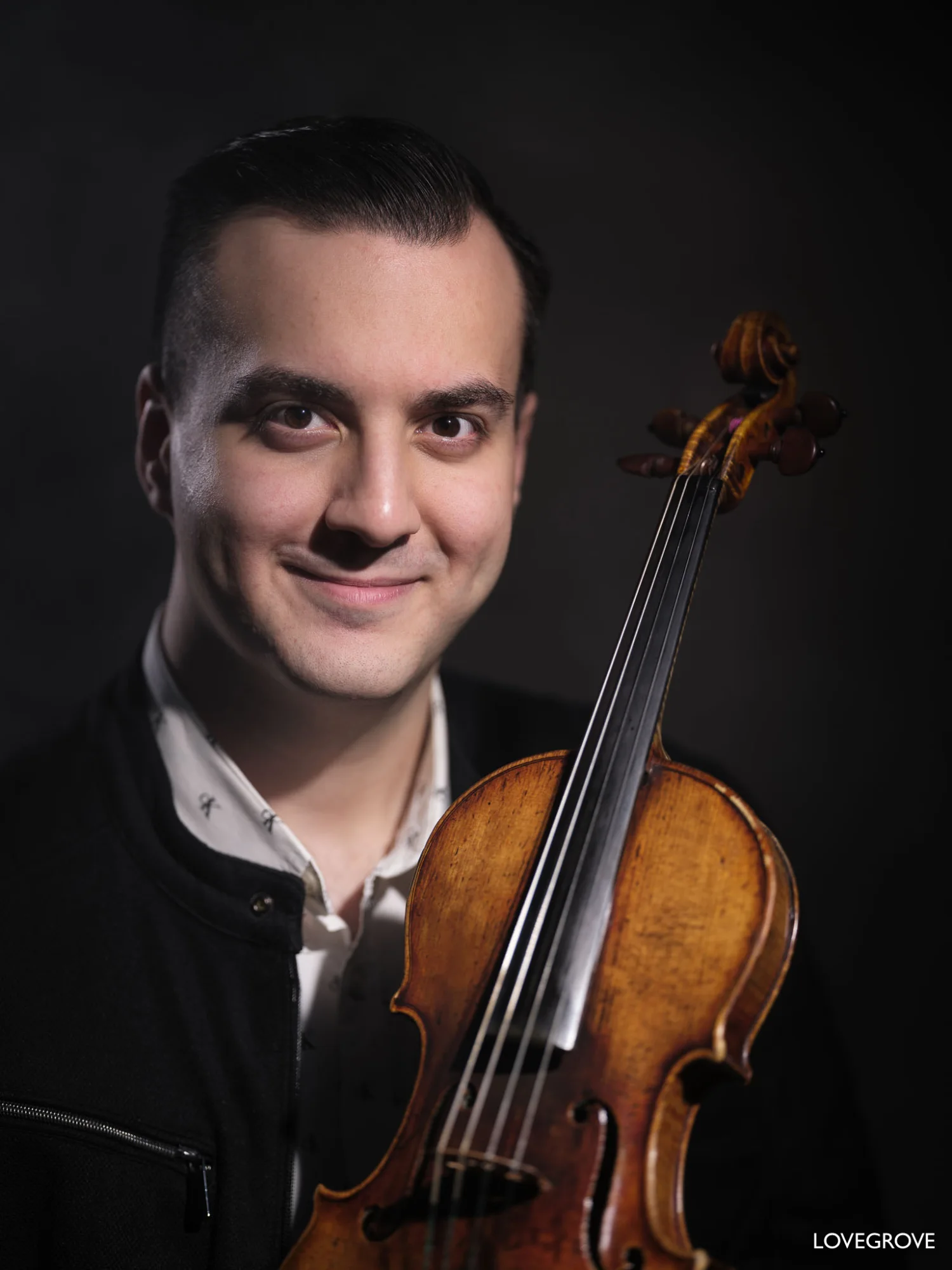
Belgian violinist Vilmos Csikos completed his master's studies at the Koninklijk Conservatorium Brussel and the Royal Conservatory of Mons. Over the course of his career, he has earned recognition in numerous international competitions and appeared as a soloist with orchestras across Europe and Asia. Drawn to both standard masterpieces and rarely heard repertoire, he recently presented the Belgian premiere of Henri Vieuxtemps’s Eighth Concerto and the world premiere of Vieuxtemps's Fantaisie for Violin, Voice and Orchestra. Here, he speaks about his musical origins, his affinity for Shostakovich, and the rare experience of bringing forgotten works back to the concert stage.
What first drew you to the violin, and when did you realise you wanted to make music your profession?
I grew up surrounded by music, as most of my family are musicians. I was particularly inspired by watching my violinist grandmother perform, which made me want to start playing myself. Music was therefore a natural part of my upbringing, and my passion for the violin developed over time. As I continued studying and discovering new repertoire, I realised that music was much more than a hobby for me. I wanted to dedicate myself to it professionally and build my life around sharing music with others.
How would you describe your musical personality, and which composers bring it out most naturally?
I would describe my musical personality as expressive, curious, and passionate. I am always interested in exploring different musical styles and discovering new repertoire, as I believe every composer has a unique world to offer. At the moment, I feel particularly drawn to Dmitri Shostakovich, whose music combines emotional depth, dramatic intensity, irony, and lyricism. I am fascinated by the contrasts in his music and the way it challenges me both technically and artistically. I also enjoy exploring the Romantic repertoire, particularly works that allow me to combine virtuosity with a strong emotional narrative.
Which musical experience has meant the most to you personally?
Several experiences have been particularly meaningful to me, but two that stand out are performing the world premiere of the Fantasy for Voice and Violin and the Belgian premiere of Henri Vieuxtemps’s 8th Concerto, both with a symphony orchestra. Performing a work for the very first time is a unique experience, as you become part of its history from the very beginning. Playing Vieuxtemps, an important Belgian composer, was also a great honour. These performances challenged me artistically and strengthened my desire to continue exploring new musical experiences and sharing them with audiences.
“Performing a work for the very first time is a unique experience, as you become part of its history from the very beginning.”
Vilmos Csikos
What do you enjoy doing when you’re not playing the violin?
Outside of music, I enjoy going to the cinema, watching films and TV series, exploring different restaurants, and playing PlayStation. I also like discovering new places and enjoying different experiences. These activities help me relax, recharge, and maintain a balance between my musical life and my personal interests.
What would you most like to explore or achieve in the next chapter of your musical journey?
In the next chapter of my musical journey, I would like to continue developing my artistic identity, discovering new repertoire, and performing for audiences in different parts of the world. I am particularly interested in exploring lesser-known works alongside the great masterpieces of the violin repertoire. Taking part in competitions and performing with orchestras are important opportunities to challenge myself and grow as a musician. Ultimately, my goal is to keep learning, collaborate with inspiring musicians, and build meaningful connections with audiences through music.
Read this interview as a magazine edition
The designed Maestro Magazine edition of this conversation.