
Composition Becomes a Conversation Between People
For Greek guitarist and composer Michalis Sourvinos, music is an ongoing exploration of how far an instrument can go expressively while technique serves the heart of the musical idea.

Greek guitarist and composer Michalis Sourvinos has built a multifaceted career as a soloist, chamber musician, and educator, performing extensively across Europe and internationally. Recognised in recent competitions such as the Bach and Beethoven International Music Competitions, he views composition as an extension of his performance and teaching. In this interview, Sourvinos discusses developing his voice on the guitar, composing for fellow musicians, and why expressiveness and simplicity remain central to his creative process.
What first drew you to composition, and how did it become part of your life as a guitarist?
Composition came into my life quite naturally, through playing and improvisation. It began with small ideas on the guitar—a melody, an imagined image, a motif, or a harmonic progression—that gradually started to take shape and develop.
Some of these ideas remained as spontaneous moments of improvisation, while others evolved into more complete and structured compositions. This was when I began to realize that composition could become a deeply personal part of my musical journey.
Over time, composing became an integral part of my development as a guitarist, giving me a more personal and authentic way of expressing myself. The guitar is no longer simply the instrument I play; it has also become the medium through which I explore and discover my own musical identity.
What quality in a piece of music matters most to you as a composer?
For me, as a composer and guitarist, the most important quality in a piece of music is expressiveness. I want music to have emotion and character, and to be able to communicate something to the listener. Of course, melody, harmony, rhythm, and sound are all important, but above all, I believe that a piece should have its own identity and be authentic.
I believe that technique is a very important tool, but it should never be the ultimate goal. Whether in composition or performance, technique should serve the idea and the emotion of the piece. As a guitarist, I am also very interested in sound, dynamics, variety, and in the way a musical work can breathe and evolve.
What moves me most is when a listener can feel something through the music, even without knowing the technique or the theory behind it.
What I seek through composition is a sense of personal identity—to create music that, when heard, feels as though it has something meaningful to say and genuinely comes from the person who created it.
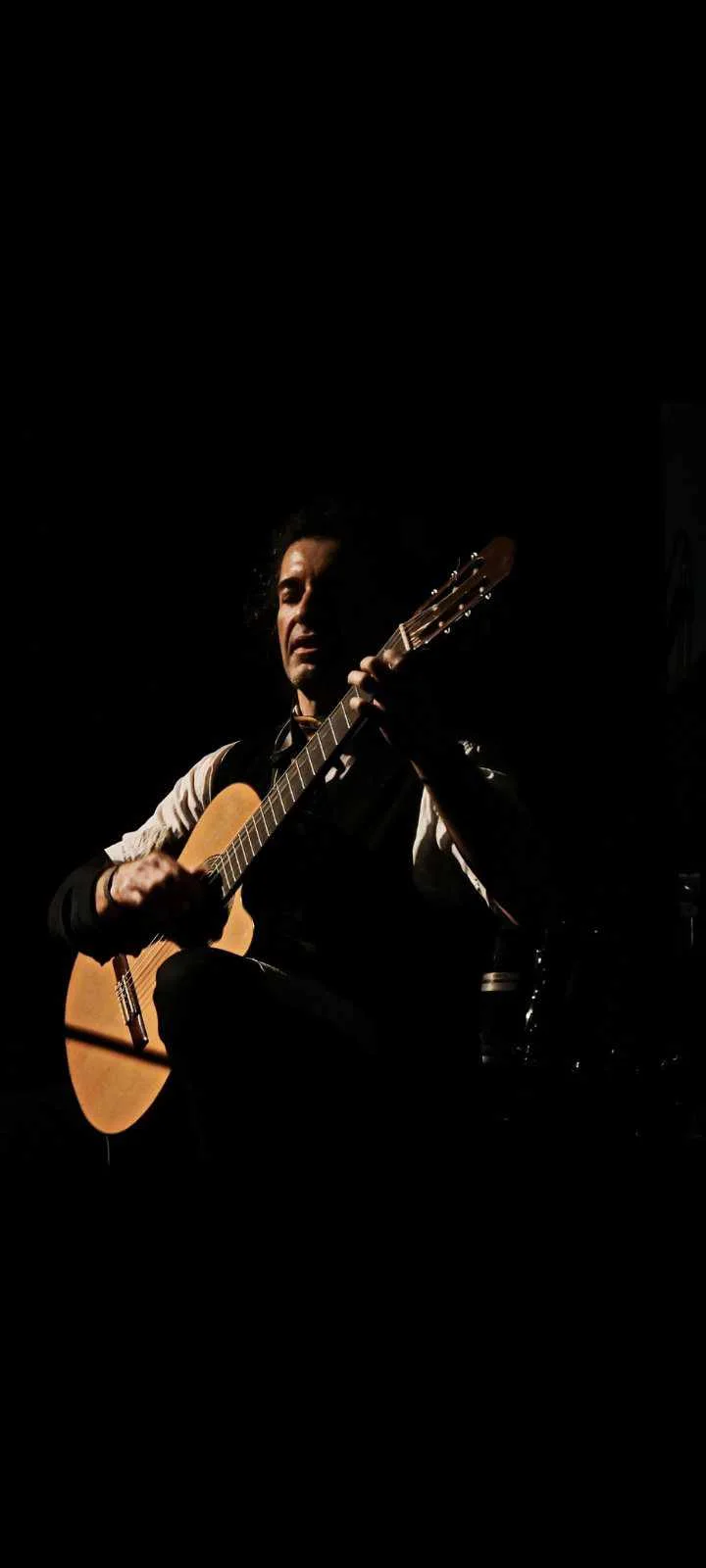
When composing the solo guitar pieces on LISHORT, how did you find fresh possibilities in an instrument you know so well?
I think that knowing the guitar so well was both my greatest advantage and my greatest challenge. I had a very clear understanding of what the instrument could do, so with the Sonata Lishort, I wanted to look beyond the familiar solutions and explore new possibilities.
I was particularly interested in the instrument’s sound and expressive potential. I experimented with different sound areas, different positions on the guitar, and ways of allowing melody and harmony to coexist. I was also interested in how a solo guitar could create the impression of a richer, almost orchestral sound.
However, I did not begin with the intention of demonstrating what the guitar could technically do. I wanted the music to come first and for the technique to serve the musical idea. Through this process, new possibilities emerged that I had not necessarily anticipated from the beginning, and that became one of the most interesting aspects of composing the piece.
I did not simply want to write something that was technically difficult. I wanted to discover how far the instrument could go expressively.
And in many ways, the guitar itself guided me through the process. As I was composing, I discovered possibilities that I might not have thought of beforehand. For me, that is one of the most beautiful aspects of composition: no matter how well you know an instrument, it can always reveal something new to you.
“No matter how well you know an instrument, it can always reveal something new to you.”
Michalis Sourvinos
How does teaching guitar, mandolin and chamber music shape the way you write for other musicians?
Teaching keeps me constantly in contact with different people and different ways of expressing themselves. Every student and every musician has their own personality, their own abilities, and their own way of understanding music. This has helped me not to see the score as something completely fixed or impersonal.
When I write for a particular musician, I am interested in discovering what they can uniquely bring to the music. There may be a technique or a particular sound possibility that I would never have thought of if I were working purely on my own, from a theoretical perspective. I think that is where the most interesting part of collaboration begins: when the composer’s initial idea meets the personality of the performer, and something emerges that neither of them could have created on their own.
I am not so interested in writing music that simply “fits” an instrument. I am more interested in writing music that gives the performer a sense that they have something to say. For me, that is also one of the most beautiful aspects of chamber music: composition becomes a conversation between people.
What would you most like to explore in your next composition that you haven’t tried before?
I think what I would most like to explore is something I have not done before, something that might take me a little outside of my comfort zone. I am interested in seeing how my music might change when I work with different sounds, different instruments, or even musicians who have a completely different approach to music.
At the same time, I would like to give more space to simplicity. I want to become less afraid of silence or of a small, simple idea, and see where it can lead me. When you are composing, there is often a tendency to keep adding something. I am now also interested in the opposite: what can I take away without losing the essence of the music?
And, to be honest, I would like my next composition to surprise me as well—to leave room for discovery. I want to start with an idea, but allow something to emerge along the way that I could not have imagined from the beginning. I think that is perhaps one of the most exciting aspects of composition.
Read this interview as a magazine edition
The designed Maestro Magazine edition of this conversation.